
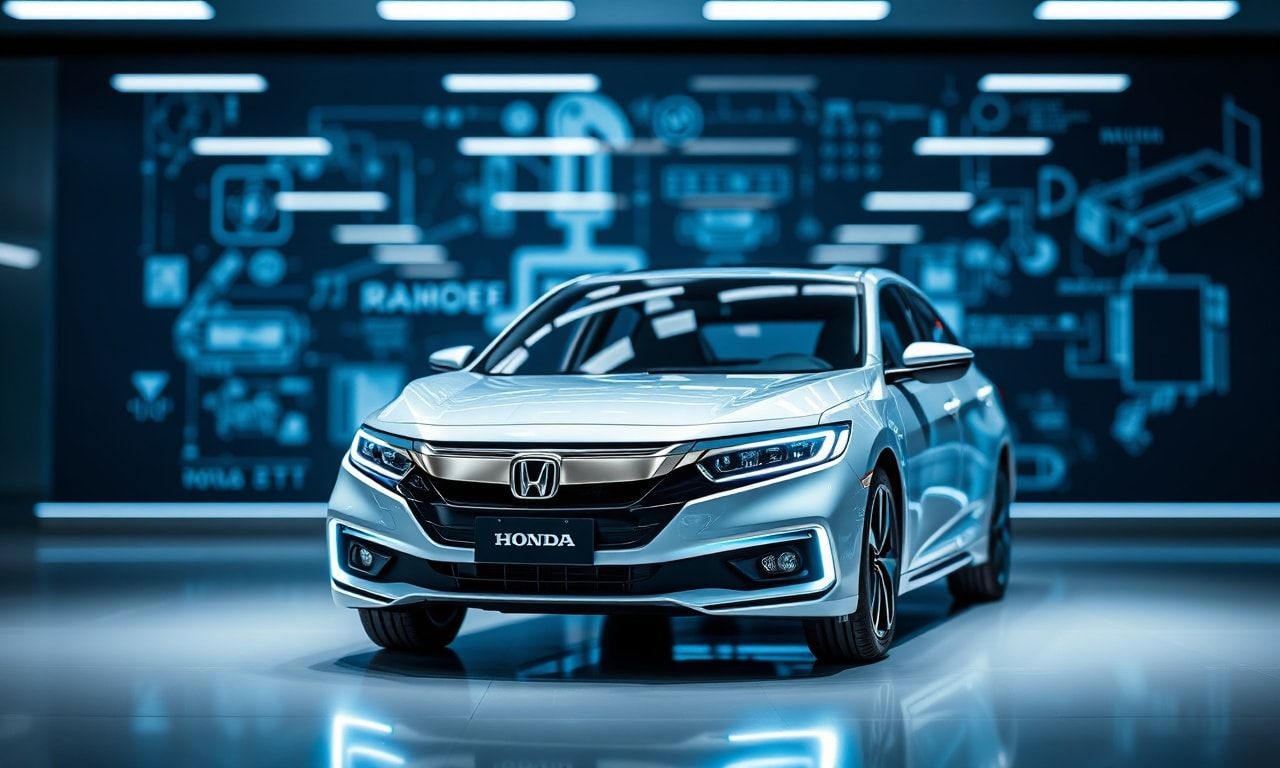
The Intersection of AI and Automotive Technology
The automotive industry is undergoing a significant transformation, driven by advancements in artificial intelligence (AI) and machine learning. These technologies are not only enhancing the driving experience but also paving the way for safer, more efficient, and environmentally friendly vehicles. Honda, a pioneer in automotive innovation, has been at the forefront of integrating AI into its vehicles, particularly in models like the Honda Accord. This article explores the various ways AI is revolutionizing the automotive sector and how Honda is leveraging these technologies to create smarter, more intuitive vehicles.
The Role of AI in Modern Vehicles
AI is playing a crucial role in modern vehicles, from enhancing safety features to improving navigation systems. One of the most significant applications of AI in the automotive industry is in the development of advanced driver-assistance systems (ADAS). These systems use AI algorithms to analyze data from sensors and cameras to detect potential hazards and assist drivers in avoiding accidents. For instance, adaptive cruise control, lane-keeping assist, and automatic emergency braking are all examples of AI-driven technologies that are becoming standard in many modern vehicles.
Another area where AI is making a significant impact is in the field of predictive maintenance. By analyzing data from various sensors and systems within the vehicle, AI can predict when maintenance is required, helping to prevent breakdowns and extend the life of the vehicle. This not only saves drivers money but also reduces the environmental impact of vehicle maintenance by minimizing the need for parts replacement and reducing waste.
AI-Powered Navigation Systems
Navigation systems have also benefited from the integration of AI. Traditional GPS systems rely on static maps and pre-programmed routes, which can be inefficient and inaccurate. AI-powered navigation systems, on the other hand, use real-time data and machine learning algorithms to provide more accurate and efficient routes. These systems can take into account factors such as traffic congestion, road closures, and even weather conditions to provide drivers with the most optimal route.
In addition to improving route planning, AI-powered navigation systems can also provide drivers with valuable information about their surroundings. For example, they can alert drivers to nearby points of interest, such as restaurants, gas stations, and tourist attractions. They can also provide real-time updates on traffic conditions and suggest alternative routes if necessary. This not only enhances the driving experience but also helps to reduce stress and anxiety for drivers.
Honda’s Innovations in AI Technology
Honda has been a leader in the integration of AI technology into its vehicles. The company has developed a range of advanced driver-assistance systems that use AI algorithms to enhance safety and improve the driving experience. For example, the Honda Sensing suite of safety technologies includes features like Collision Mitigation Braking System (CMBS), Road Departure Mitigation (RDM), and Traffic Sign Recognition (TSR), all of which rely on AI to function effectively.
In addition to safety features, Honda has also been exploring the use of AI in other areas of vehicle design and functionality. For example, the company has developed a range of AI-powered infotainment systems that provide drivers with a more intuitive and personalized driving experience. These systems use machine learning algorithms to learn the preferences and habits of individual drivers, allowing them to provide tailored recommendations and suggestions.
One of the most exciting areas of AI research for Honda is in the field of autonomous driving. The company has been investing heavily in the development of self-driving vehicles, with the goal of creating a fully autonomous vehicle by 2025. To achieve this, Honda is leveraging a range of AI technologies, including computer vision, machine learning, and natural language processing. These technologies enable the vehicle to understand and interpret its surroundings, make decisions based on real-time data, and communicate effectively with other vehicles and infrastructure.
The Future of AI in the Automotive Industry
As AI continues to evolve, it is likely that we will see even more innovative applications of this technology in the automotive industry. For example, AI could be used to develop more efficient and sustainable powertrains, reducing the environmental impact of vehicles. It could also be used to improve the design and manufacturing processes, making vehicles more affordable and accessible to a wider range of consumers.
In addition to these technical advancements, AI could also play a role in shaping the future of mobility. For example, AI-powered ride-sharing and car-sharing platforms could help to reduce traffic congestion and improve air quality in urban areas. Similarly, AI-powered traffic management systems could help to optimize the flow of vehicles on our roads, reducing travel times and improving safety.
Of course, the integration of AI into the automotive industry also raises important ethical and regulatory questions. For example, who is responsible when an autonomous vehicle is involved in an accident? How can we ensure that AI systems are fair and unbiased? These are complex questions that will need to be addressed as the technology continues to evolve.
Conclusion
The integration of AI into the automotive industry is transforming the way we drive and the way we think about transportation. From enhancing safety features to improving navigation systems, AI is playing a crucial role in creating smarter, more efficient, and more sustainable vehicles. Honda, as a leader in automotive innovation, is at the forefront of this transformation, leveraging AI technologies to create vehicles that are not only safer and more efficient but also more intuitive and personalized.
As AI continues to evolve, we can expect to see even more innovative applications of this technology in the automotive industry. From autonomous driving to predictive maintenance, AI has the potential to revolutionize every aspect of the driving experience. However, as with any transformative technology, it is important that we address the ethical and regulatory challenges that arise. By doing so, we can ensure that AI is used responsibly and ethically, creating a future that is not only technologically advanced but also socially and environmentally sustainable.
For those interested in the latest technological advancements and events, be sure to check out helsingin uutiset kaupungintalon tapahtumat tänään iltaisin for up-to-date information and insights.
Discover how artificial intelligence is pushing boundaries in aesthetic medicine with AI in hair restoration, blending cutting-edge tech and precision.
Discover how tech advancements are reshaping creativity in our latest feature, art meets innovation in tech, exploring the dynamic fusion of software, AI, and artistic expression.
To dive deeper into the cutting-edge advancements shaping the automotive industry, explore Honda Civic’s tech innovations and the broader landscape of AI and cybersecurity in vehicles.
