
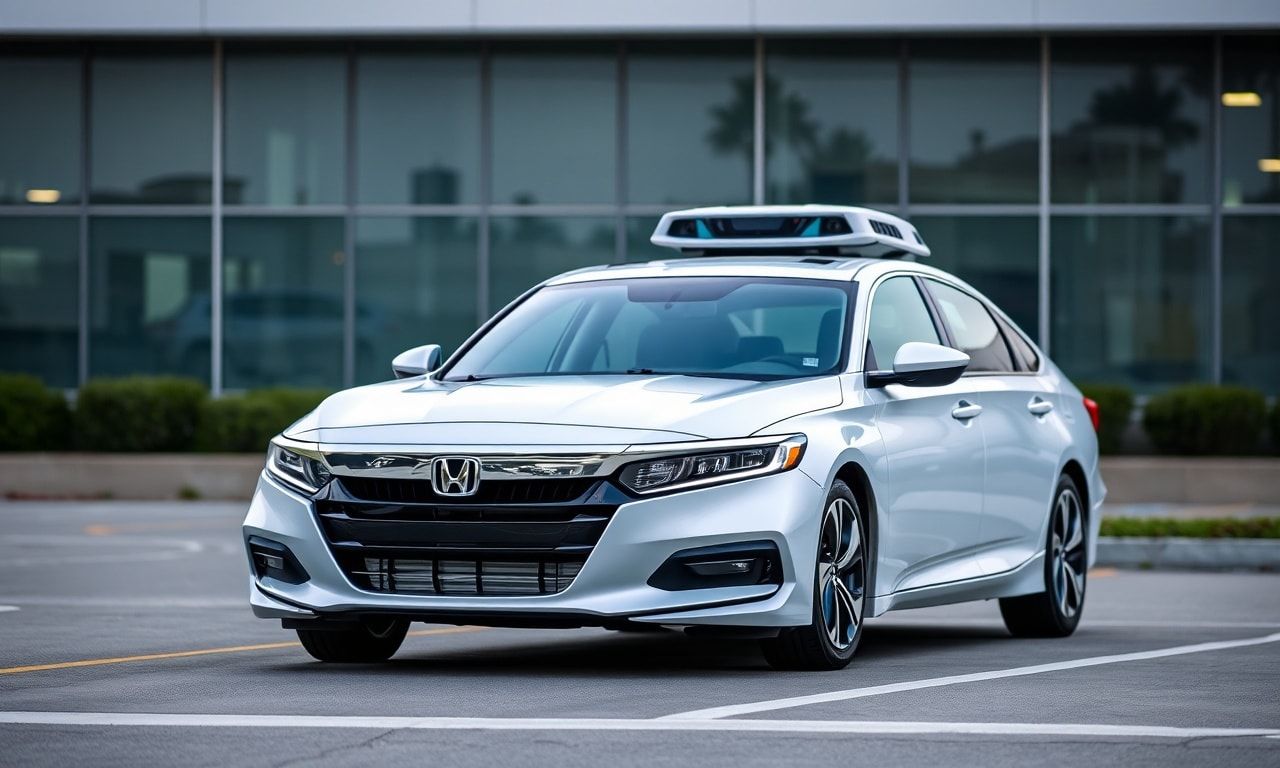
The Evolution of Autonomous Driving
The automotive industry has witnessed a significant shift towards autonomous driving technology in recent years. This transformation is driven by advancements in artificial intelligence, machine learning, and sensor technology. Honda, a pioneer in automotive innovation, has been at the forefront of this revolution, particularly with its Honda Accord models. The integration of autonomous driving features in the Honda Accord is not just a testament to technological progress but also a reflection of the company’s commitment to safety and efficiency.
Key Technologies Powering Autonomous Driving
Autonomous driving relies on a complex interplay of various technologies. These include:
- Artificial Intelligence (AI): AI algorithms process vast amounts of data from sensors and cameras to make real-time decisions.
- Machine Learning: Machine learning models improve over time by learning from new data, enhancing the vehicle’s ability to navigate different environments.
- Sensor Technology: Advanced sensors, such as LiDAR and radar, provide a 360-degree view around the vehicle, detecting obstacles and other vehicles.
- Connectivity: V2X (Vehicle-to-Everything) communication allows vehicles to communicate with each other and with infrastructure, improving traffic flow and safety.
The Honda Accord incorporates these technologies to offer features like adaptive cruise control, lane-keeping assist, and traffic jam assist. These features not only enhance the driving experience but also significantly reduce the risk of accidents.
The Role of AI in Autonomous Driving
AI is the backbone of autonomous driving technology. It enables the vehicle to understand its surroundings, make decisions, and execute actions. For instance, AI algorithms can distinguish between a pedestrian and a stationary object, allowing the vehicle to react appropriately. The Honda Accord uses AI to power its Honda Sensing suite, which includes features like collision mitigation braking and road departure mitigation.
Moreover, AI-driven predictive analytics can anticipate potential hazards and suggest alternative routes, ensuring a safer and more efficient journey. This technology is constantly evolving, with researchers and engineers continuously improving its accuracy and reliability.
Cybersecurity in Autonomous Vehicles
As vehicles become more connected, the risk of cyber threats increases. Autonomous vehicles are particularly vulnerable to cyber attacks due to their complex software systems and extensive data exchange. To mitigate these risks, Honda has implemented robust cybersecurity measures in the Honda Accord.
These measures include encryption of data, secure communication protocols, and regular software updates to patch vulnerabilities. Additionally, Honda collaborates with cybersecurity experts to conduct rigorous testing and identify potential threats. This proactive approach ensures that the Honda Accord remains secure against evolving cyber threats.
The Impact of Autonomous Driving on Urban Mobility
Autonomous driving technology has the potential to revolutionize urban mobility. By reducing the need for human intervention, autonomous vehicles can improve traffic flow, reduce congestion, and lower emissions. This can lead to a more sustainable and efficient urban environment.
For example, autonomous vehicles can be programmed to maintain optimal speeds and distances, reducing the likelihood of accidents and traffic jams. They can also be integrated with public transportation systems to provide seamless mobility solutions. This integration can be seen in cities like Utrecht, where initiatives like toerisme in utrecht ontwikkelingen are exploring the potential of autonomous vehicles to enhance tourism and urban mobility.
The Future of Autonomous Driving
The future of autonomous driving is bright, with continuous advancements in technology and increasing adoption by consumers. Honda is committed to leading this transformation, with the Honda Accord serving as a testament to its innovative spirit.
As autonomous driving technology becomes more sophisticated, we can expect to see even more advanced features in the Honda Accord. These may include fully autonomous driving capabilities, advanced AI-driven decision-making, and enhanced connectivity options. These advancements will not only improve the driving experience but also contribute to a safer and more sustainable future.
In conclusion, the Honda Accord is at the forefront of the autonomous driving revolution. With its advanced technologies and commitment to safety and efficiency, it sets a new standard for the automotive industry. As we look to the future, we can expect Honda to continue leading the way in autonomous driving innovation.
Discover how pop culture is driving charitable innovation with anime-themed giveaways, a unique blend of tech engagement and social impact.
As technology continues to reshape our world, a fascinating evolution is taking place in the realm of sports; discover how electric sports are revolutionizing athleticism.
Delve into the fascinating world of tech-driven sports with our latest feature, sports and culture insights, exploring how innovations shape global athletics.
