
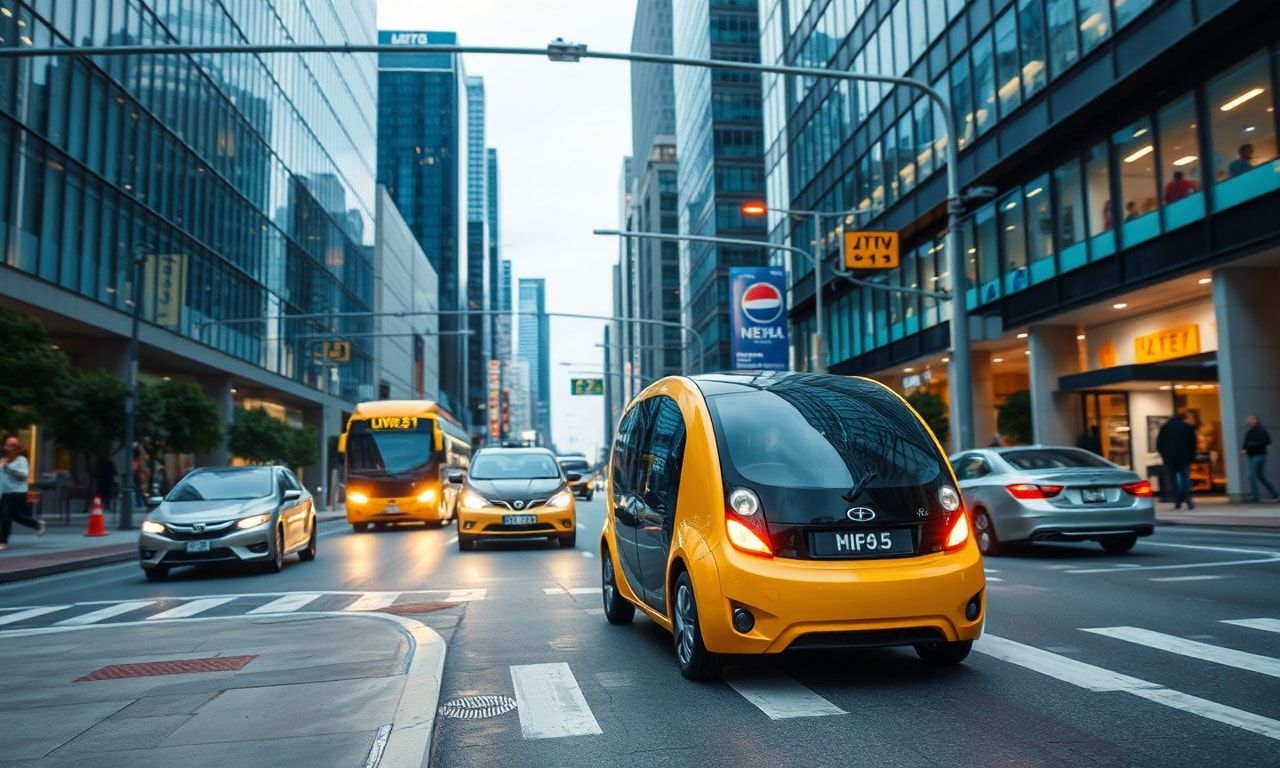
The Evolution of Urban Transportation
The landscape of urban mobility is undergoing a profound transformation, driven by rapid advancements in technology. From autonomous vehicles to smart city infrastructure, the way we navigate our cities is evolving at an unprecedented pace. This shift is not only reshaping our daily commutes but also redefining the very fabric of urban living. As we stand on the brink of this technological revolution, it’s crucial to understand the key innovations that are paving the way for a smarter, more efficient urban future.
The Rise of Autonomous Vehicles
Autonomous vehicles are at the forefront of this mobility revolution. Companies like Tesla, Waymo, and Honda are investing heavily in self-driving technology, aiming to make our roads safer and more efficient. These vehicles use a combination of sensors, cameras, and artificial intelligence to navigate complex urban environments. The potential benefits are immense, including reduced traffic congestion, lower emissions, and increased accessibility for those who cannot drive. As these technologies continue to mature, we can expect to see a significant shift in how we perceive and use personal transportation.
The Role of AI in Urban Mobility
Artificial intelligence is playing a pivotal role in the development of smart urban mobility solutions. AI algorithms are being used to optimize traffic flow, predict maintenance needs, and enhance the overall efficiency of public transportation systems. For instance, AI-powered traffic management systems can analyze real-time data to adjust traffic lights and reduce congestion. Similarly, AI can be used to improve the accuracy of public transit schedules, ensuring that buses and trains arrive on time and reducing wait times for passengers. The integration of AI into urban mobility is not just about convenience; it’s about creating a more sustainable and livable urban environment.
Smart City Infrastructure
Smart city infrastructure is another critical component of the urban mobility revolution. This includes the deployment of IoT (Internet of Things) devices, smart sensors, and data analytics platforms that collect and analyze vast amounts of data to improve urban living. For example, smart parking systems use sensors to detect available parking spaces and guide drivers to them, reducing the time and frustration associated with finding a parking spot. Similarly, smart street lighting systems can adjust brightness based on real-time usage, saving energy and reducing costs. These innovations are not only making our cities more efficient but also more sustainable.
The Impact of Technology on Urban Farming
Technology is also transforming the way we think about urban farming. With the global population expected to reach 9.7 billion by 2050, the demand for food will continue to rise. Urban farming offers a sustainable solution to this challenge by bringing food production closer to consumers. Innovations such as vertical farming, hydroponics, and aeroponics are making it possible to grow food in urban environments with minimal land and water usage. These technologies not only increase food security but also reduce the carbon footprint associated with traditional farming methods. For the latest updates on urban farming innovations, check out urban farming news today.
The Role of Drones in Urban Mobility
Drones are another exciting development in the field of urban mobility. These unmanned aerial vehicles are being explored for a variety of applications, from delivery services to emergency response. Companies like Amazon and UPS are already testing drone delivery systems, which promise to deliver packages faster and more efficiently than traditional methods. In the realm of emergency response, drones can be used to quickly assess disaster areas, deliver medical supplies, and even provide real-time video feeds to first responders. As drone technology continues to advance, we can expect to see even more innovative applications in the field of urban mobility.
The Future of Urban Mobility
The future of urban mobility is bright and full of possibilities. As technology continues to evolve, we can expect to see even more innovative solutions that make our cities smarter, more efficient, and more sustainable. From autonomous vehicles to smart city infrastructure, the possibilities are endless. However, it’s important to remember that technology is just one piece of the puzzle. To truly transform our cities, we need to adopt a holistic approach that considers the needs of all urban residents. By embracing these technological advancements and working together, we can create a future where our cities are not just places to live, but thriving, sustainable communities.
